Robot Vacuum vs Cordless Vacuum
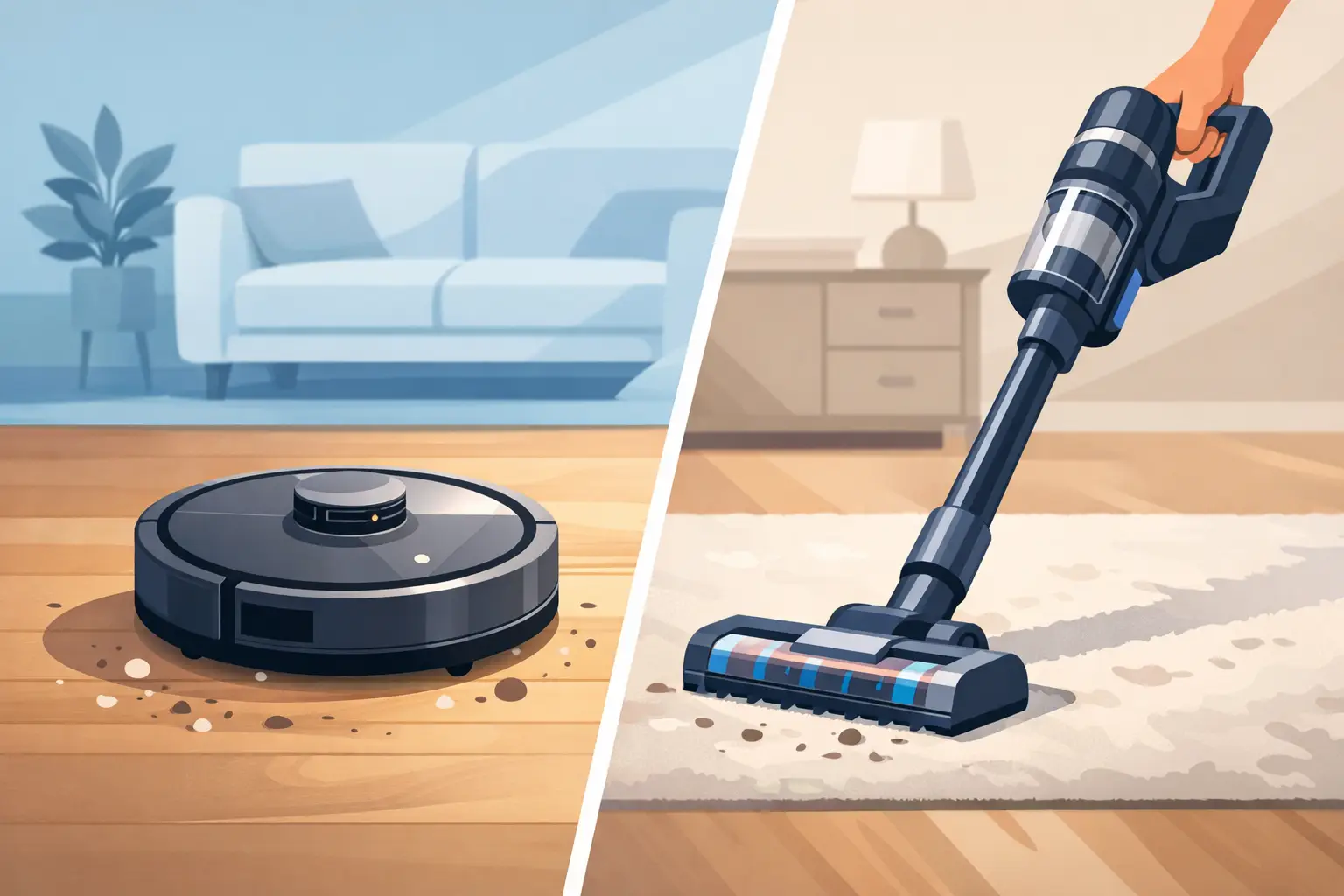
Some homes ask for a vacuum that works quietly in the background. Others need one that can tackle a staircase, a sofa, and a pile of cereal in under two minutes. That is the real question behind robot vacuum vs cordless vacuum: not which one is better in the abstract, but which one fits the way you actually live.
For style-conscious households, the decision is rarely just about cleaning. It is about time, floor plan, storage, daily rhythm, and how much visible effort you want tied to basic upkeep. A well-chosen vacuum can make your home feel more polished with less friction. The wrong one can become another appliance you avoid using.
Robot vacuum vs cordless vacuum: the core difference
A robot vacuum is designed for maintenance cleaning. It moves through your home on its own, handles daily dust and debris, and keeps floors looking consistently presentable with minimal hands-on effort. That appeal is obvious for busy professionals, families, and anyone who wants a cleaner-looking home without having to think about it every day.
A cordless vacuum is built for control. You decide where it goes, how deeply it cleans, and when the job is done. It is usually better for spot cleaning, edges, stairs, upholstery, and those messes that do not wait for a schedule.
If your goal is invisible maintenance, a robot model feels luxurious in the best way. If your goal is fast, targeted cleaning with stronger intervention, cordless usually wins. Many shoppers assume they serve the same purpose. They do not. They overlap, but they shine in different moments.
Which one cleans better?
This is where expectations matter. Cordless vacuums typically offer stronger direct suction and better flexibility for above-floor cleaning. If you are dealing with pet hair on upholstery, crumbs in dining chairs, dust along baseboards, or debris on stairs, a cordless model is the more capable tool. You can move quickly from one surface to another and give extra attention where it is needed.
Robot vacuums have improved dramatically, especially in navigation, mapping, and automatic dirt detection. On hard floors and low-pile rugs, many do a very good job of keeping up with everyday dust, hair, and tracked-in debris. But they are still limited by form factor. They cannot lift onto furniture, reach corners with the same precision, or give you that immediate deep-clean feeling after a busy weekend.
So if you are asking which one delivers the more thorough clean in a single session, the cordless vacuum usually has the edge. If you are asking which one keeps your floors looking better all week long with almost no effort, the robot vacuum makes a compelling case.
Floors, rugs, and pet hair
Homes with mostly hard flooring are often ideal for robot vacuums. They can sweep through daily, collect dust before it builds up, and make open spaces feel noticeably more refined. If your living room, kitchen, and hallways are fairly unobstructed, a robot can maintain that just-tidied look surprisingly well.
Cordless vacuums tend to perform better in mixed-surface homes. Thick rugs, stair runners, corners, and furniture edges all benefit from a vacuum you can guide manually. Pet owners should pay close attention here. A robot vacuum can help manage the constant layer of fur, but a cordless vacuum is usually more effective for embedded hair, furniture, and quick accidents around food bowls and litter areas.
Convenience is not the same for everyone
Robot vacuums are convenient in a very specific way. They save time by handling routine floor cleaning without asking much from you. Once the mapping is set up and the schedule is dialed in, they become part of the background of the home. That is especially attractive if you want daily upkeep to feel almost automatic.
But they are not completely effortless. You still need to empty the bin unless you have a self-emptying dock, clear tangled hair from brushes, and occasionally rescue the vacuum from cords, fringe, toys, or tight spaces. In a home with cluttered floors or lots of small obstacles, the convenience can drop quickly.
Cordless vacuums require more active effort, but they are convenient in another sense: they are immediate. You grab one, clean the mess, and put it away. No app, no mapping, no waiting for a scheduled cycle. For households with kids, pets, or frequent spills, that kind of instant response can feel more useful than automation.
Storage and visual impact
For design-conscious homes, storage matters more than people admit. Cordless vacuums need a charging station or wall mount and are often visible. Some premium models look sleek enough to display, but they still take up vertical space.
A robot vacuum stays low-profile and tucks under furniture or rests discreetly on a dock. Still, the dock needs floor space, and if you choose a larger auto-empty base, it becomes more noticeable. In compact apartments, that trade-off is worth measuring before you buy.
Cost, upkeep, and long-term value
The upfront price can vary widely in both categories, but premium robot vacuums often cost more, especially if they include advanced mapping, mopping functions, obstacle avoidance, and self-emptying docks. What you are paying for is automation and convenience.
Cordless vacuums can also reach premium price points, particularly if they include multiple attachments, powerful motors, and refined filtration systems. What you are paying for is versatility and stronger hands-on performance.
Upkeep looks different too. Robot vacuums tend to need more routine maintenance than buyers expect. Brushes, wheels, sensors, and dustbins all need attention, and replacement parts can add up over time. Cordless vacuums have simpler day-to-day care, though battery longevity matters. After a few years, battery performance may decline depending on usage and charging habits.
From a value perspective, it comes down to what saves you more friction. If a robot vacuum prevents floor mess from ever becoming noticeable, that value is real. If a cordless vacuum helps you clean your whole home quickly and thoroughly whenever needed, that value is just as real.
Robot vacuum vs cordless vacuum for different home types
In smaller apartments, a cordless vacuum is often the safer choice. It is flexible, easy to store if the design is compact, and better suited for tight corners, furniture, and multi-use spaces. A robot vacuum can still work well, but floor clutter and limited dock space can make it less appealing.
In larger homes with open layouts, robot vacuums become much more attractive. They can cover more square footage consistently, which helps preserve that clean, elevated look between deeper cleaning sessions. If your main living areas are spacious and relatively uncluttered, automation feels less like a gimmick and more like a smart upgrade.
For multi-level homes, a cordless vacuum is almost essential. Carrying a robot from floor to floor is possible, but it removes some of the convenience. A robot can still be excellent on your main level while a cordless handles stairs and upper rooms.
When one vacuum is enough – and when it is not
If you live in a tidy, mostly hard-floor home and want daily maintenance with minimal effort, a robot vacuum can be enough for a surprisingly long time. You may still need the occasional secondary cleaner, but your everyday floor care is covered.
If your home has pets, stairs, upholstery, rugs, and frequent messes, a cordless vacuum is more likely to serve as your true primary machine. It simply handles more scenarios well.
For many premium households, the best answer is not robot vacuum or cordless vacuum. It is both. A robot vacuum keeps the baseline clean. A cordless vacuum handles detail work, quick spills, and deep cleaning. That combination creates the kind of polished, low-friction home routine people actually want.
How to choose without overthinking it
Ask yourself one honest question: do you want to clean less often, or do you want to clean more effectively when you do it? If your answer is less often, lean toward a robot vacuum. If your answer is more effectively, lean toward cordless.
Then look at your floors. Hard surfaces and open layouts favor robots. Stairs, thick rugs, upholstery, and fast messes favor cordless. After that, think about your tolerance for maintenance. Robot vacuums save labor during cleaning but ask for more adjustment in setup and upkeep. Cordless vacuums ask for more labor during cleaning but less operational management overall.
If you are shopping for a home that feels elevated, efficient, and easy to maintain, this is not a minor purchase. It is part of how your space functions every day. At Visagino, the most appealing upgrades are the ones that quietly improve the rhythm of home life – and the right vacuum should do exactly that.
Choose the one that matches your routine, not the trend. A cleaner home feels better when the tool behind it fits naturally into the way you live.













Leave a comment