Portable Projector vs TV: Which Fits Better?
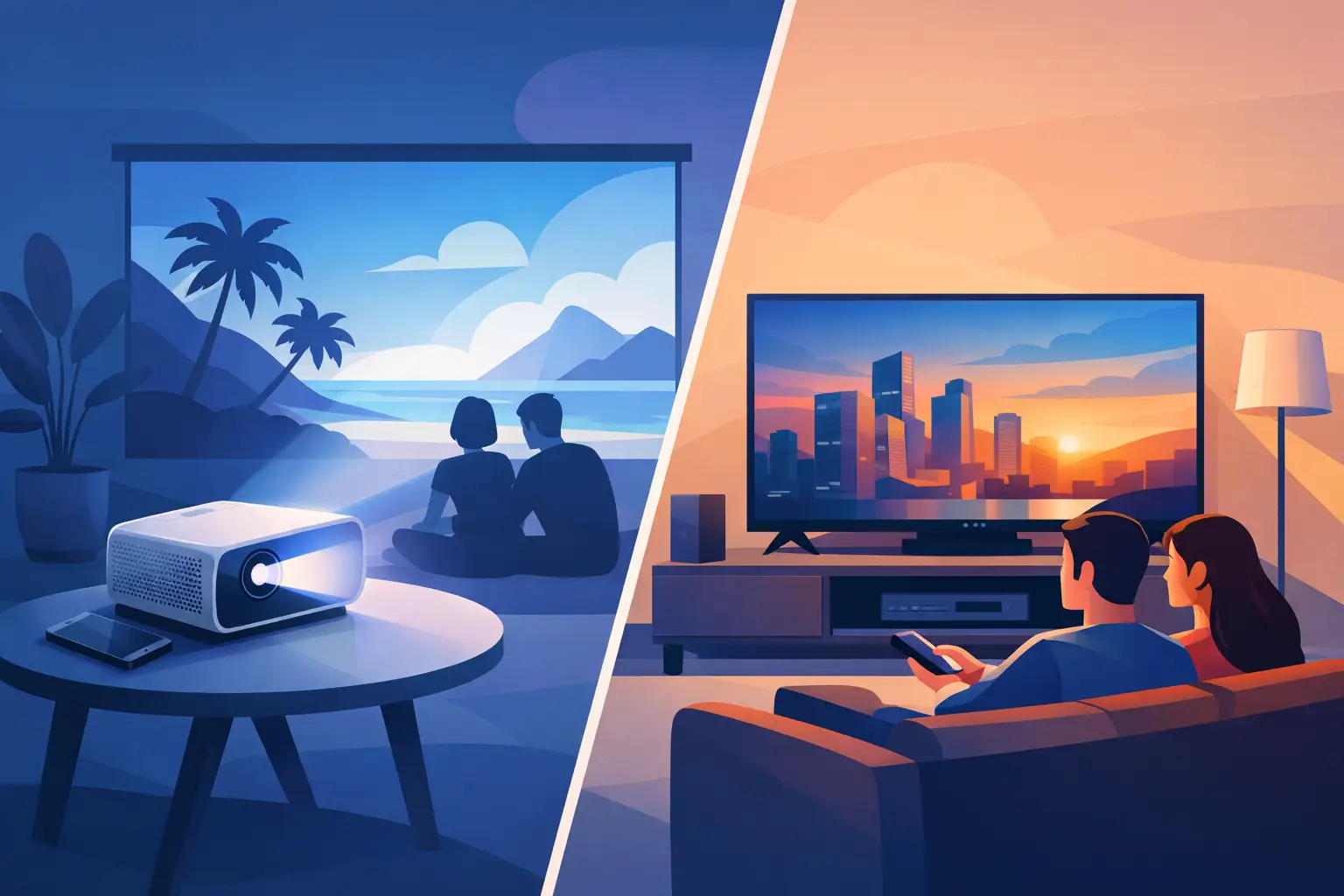
Movie night looks very different when your screen can move from the bedroom wall to the backyard patio in minutes. That is the real appeal in the portable projector vs tv conversation – not just screen size, but the kind of lifestyle each one supports. One is rooted in consistency and instant convenience. The other brings flexibility, atmosphere, and a more curated entertainment experience.
For many shoppers, this is not really a tech question first. It is a home question. It is about how you live, how much space you have, what you watch most often, and whether you want your entertainment setup to disappear into your design or become part of the occasion.
Portable projector vs TV: the real difference
A TV is the polished, dependable centerpiece. You plug it in, mount it or place it on a console, and it performs the same way every day. Bright room in the afternoon, quick streaming before bed, weekend sports with the family – it handles all of it with very little effort.
A portable projector is more lifestyle-driven. It trades some of that always-ready convenience for freedom. You can create a large-format viewing experience in spaces where a TV would feel heavy, permanent, or visually intrusive. In the right setting, it feels less like turning on a screen and more like setting a mood.
That trade-off matters. If your priority is ease and consistency, TV usually wins. If your priority is versatility and cinematic scale, a portable projector can feel far more rewarding.
Picture quality depends on where and when you watch
This is where expectations should stay realistic. A quality TV almost always delivers the cleaner, brighter, sharper image in everyday conditions. If you watch in a sunny living room, keep the blinds open, or stream a lot during the day, a TV is hard to beat. Brightness, contrast, and color are simply more dependable.
Portable projectors can look impressive, but they need the right environment. Lower ambient light makes a major difference. In a dim bedroom, finished basement, or evening outdoor setup, a projector can produce a beautiful, expansive image that feels far more immersive than a standard television. In a bright room at noon, that same projector may feel underwhelming.
Resolution also deserves a closer look. Many portable models advertise support for high-resolution content, but their native resolution may be lower than what buyers assume. A premium TV tends to offer more predictable sharpness for close viewing, especially for gaming, sports, and text-heavy menus.
So if image quality is your top priority in all lighting conditions, choose the TV. If you are willing to design the room around the experience, a projector can deliver something more dramatic.
Size and presence change the room
A TV has physical weight even when it is turned off. It occupies wall space, influences furniture placement, and often becomes the visual anchor of the room. That works well in media rooms and family spaces, but not everyone wants a large black rectangle defining their interior.
This is one of the most compelling reasons people choose portable projectors. They create a big-screen experience without requiring a permanent big-screen object. When you are done, the projector can be tucked away. That flexibility is especially attractive for apartments, multipurpose rooms, guest spaces, and homes where design matters as much as function.
There is also a luxury in temporary setup. A projector can make entertainment feel intentional. You bring it out for a film, a game night, or a weekend gathering, then return the room to its cleaner, calmer look afterward.
Sound is usually better with a TV, but not always enough
Built-in sound tends to favor TVs, especially larger premium models. Dialogue is often clearer, volume is fuller, and overall output feels more complete straight out of the box. For casual viewing, that simplicity is a major advantage.
Portable projectors have improved, particularly high-end compact models with better speaker design, but the audio still tends to be more limited. It is fine for personal viewing or a quiet evening, yet less satisfying in larger spaces or outdoor settings where ambient noise competes.
That does not make projectors a poor choice. It simply means they shine brightest when paired with a Bluetooth speaker or a dedicated sound system. If you are building a more elevated home entertainment setup, that extra layer may not feel like a drawback. If you want one device to do everything with no additional planning, TV remains easier.
Setup is where convenience and experience split apart
A TV is about immediacy. Press power, open your app, and start watching. There is almost no friction once it is installed.
A portable projector asks more from you. You may need to position it correctly, adjust focus, align the image, control the lighting, and find the best surface. Some newer models simplify this with auto-focus and auto-keystone features, which help a lot, but they do not fully remove setup time.
This is why the portable projector vs tv choice often comes down to personality. Some people enjoy creating the setup. It becomes part of the ritual. Others want their entertainment to be instant and invisible in terms of effort.
Neither preference is wrong. They just lead to different product decisions.
Portability opens up more than one room
A TV stays put. Even smaller sets are not truly portable in the way most people want. Once installed, they become part of that room.
A portable projector can move with your plans. It works for a bedroom upgrade, a dorm setup, a patio movie night, a kids’ sleepover, or a vacation rental where you want something compact and high-impact. That versatility creates value beyond the spec sheet because one device serves multiple lifestyles and spaces.
For shoppers who love products that do more than one job, this is where projectors feel especially compelling. They are not just screens. They are flexible entertainment tools that support a more dynamic home setup.
Gaming, sports, and everyday streaming
If your routine revolves around sports, news, YouTube, and quick nightly streaming, a TV usually makes more sense. It is better for frequent use, fast access, and varied lighting conditions. It also tends to offer lower input lag and smoother overall performance for competitive gaming.
Projectors can still be excellent for casual gaming and major sports events, especially when you want the event feel of a much larger image. But for players who care about responsiveness, or households where the screen is on for hours every day, a TV is often the more practical investment.
This is a good place to be honest about usage. The more your screen functions as an everyday utility, the more TV gains ground. The more it functions as an experience piece, the more the projector starts to make sense.
Value is not just about price
A portable projector may seem less expensive than a large premium TV at first glance, especially if you are chasing a theater-style image. But cost depends on the full setup. If you add a screen, an external speaker, mounting accessories, or blackout curtains, the price can climb quickly.
A TV often delivers stronger out-of-box value because the image is reliable, the sound is usually better, and the setup is simpler. It feels more complete on day one.
Still, projectors can offer exceptional value in another way. They give you scale and flexibility that a TV cannot match without dominating your room. For design-conscious shoppers, that balance can be worth paying for. The best purchase is not always the cheapest. It is the one that fits your home without compromise.
Which one should you buy?
Choose a TV if you want the easiest everyday experience, the best performance in bright rooms, stronger built-in sound, and a polished setup that works instantly. It is the smart choice for living rooms, frequent streamers, families, and anyone who values reliability over experimentation.
Choose a portable projector if you want flexibility, cinematic scale, and a more elevated entertainment atmosphere. It is especially appealing for apartment dwellers, design-focused homes, outdoor hosting, and shoppers who like premium tech that adapts to the moment.
For some homes, the most refined answer is not either-or. It is both, used differently. A TV handles daily viewing. A portable projector becomes the special-occasion upgrade that turns an ordinary night into something memorable. That is why this category continues to grow among shoppers looking for products that blend performance with lifestyle appeal.
If you are choosing just one, start with your habits, not the hype. The right screen is the one that fits your space beautifully, supports how you actually live, and makes staying in feel a little more exceptional.









Leave a comment