How to Choose a Farmhouse Sink
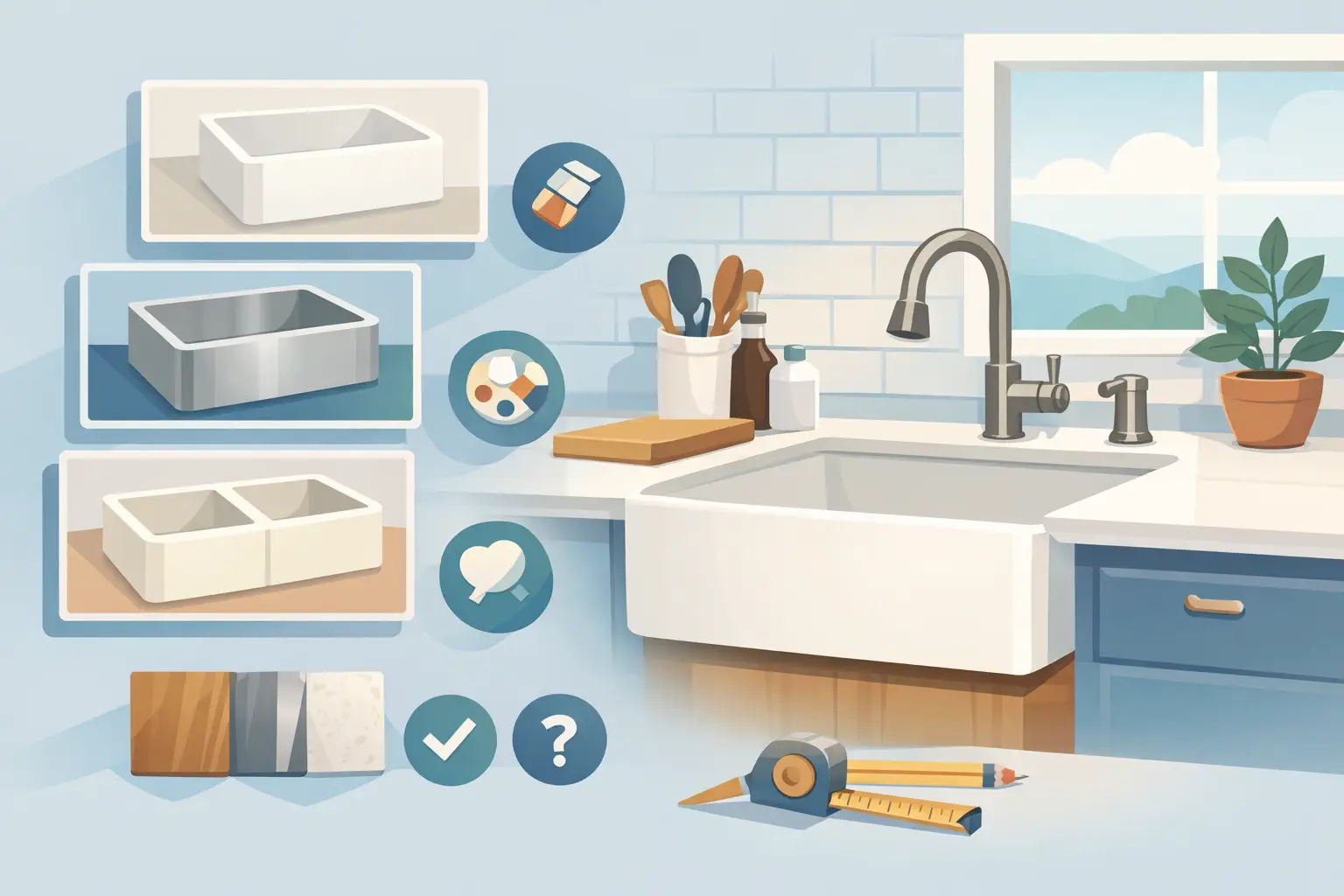
A farmhouse sink can make an ordinary kitchen feel more considered the moment you walk in. It changes the lines of the cabinetry, adds presence at the counter, and often becomes the feature people notice first. If you’re figuring out how to choose a farmhouse sink, the right decision comes down to more than style alone – it also has to fit the way you cook, clean, and use your kitchen every day.
Farmhouse sinks have lasting appeal because they combine statement design with real utility. The exposed front creates a tailored, furniture-like look, while the generous basin handles oversized cookware, baking sheets, and daily cleanup with ease. That said, not every apron-front sink performs the same way, and a model that looks beautiful in a product photo may feel less practical once installed.
How to choose a farmhouse sink for your kitchen
The best place to start is with your space, not the finish. Farmhouse sinks are deeper and visually heavier than many standard undermount or drop-in options, so proportions matter. In a compact kitchen, an oversized apron-front sink can dominate the room and reduce valuable counter space. In a larger kitchen, that same scale can feel balanced and luxurious.
Cabinet width is one of the first measurements to confirm. Many farmhouse sinks require a specially sized sink base cabinet or modifications to existing cabinetry because of the apron-front design and weight. A 30-inch sink may fit comfortably in some layouts, while others can accommodate 33 or 36 inches for a more dramatic, high-end look. Always leave room for faucet placement, countertop overhang, and surrounding work zones.
Depth deserves just as much attention as width. A deeper basin can be a pleasure when washing stock pots and serving platters, but it can also be less comfortable if you spend long stretches at the sink. If you’re tall, a very deep bowl may feel natural. If not, repeated reaching can become tiring. Premium design is at its best when it looks refined and feels easy to live with.
Single bowl or double bowl
This choice often says more about your daily routine than your design preferences. A single-bowl farmhouse sink feels clean, spacious, and contemporary. It’s excellent for large cookware, sheet pans, and families who want one uninterrupted basin for prep and cleanup.
A double-bowl version offers more separation, which can be useful if you like to wash on one side and rinse or air-dry on the other. The trade-off is that each side is smaller, so large pans may be harder to maneuver. If your kitchen is your command center and multitasking is constant, double bowl may be worth it. If you want the most visually streamlined look and maximum open space, single bowl usually wins.
Material shapes the look and the maintenance
One of the biggest decisions in how to choose a farmhouse sink is material. This is where visual style, durability, and upkeep all intersect.
Fireclay is one of the most sought-after choices for a reason. It has a classic, substantial look that works beautifully in traditional, transitional, and even modern kitchens. The finish is smooth and elegant, and quality fireclay resists stains, fading, and everyday wear well. It can, however, chip if something heavy hits it hard enough, and because it is substantial, proper support during installation matters.
Stainless steel is a strong option if you want a cleaner, more contemporary aesthetic. It feels professional, wears well in busy kitchens, and tends to be more forgiving than glossy white materials when it comes to impact. Gauge matters here – lower gauge numbers mean thicker steel, which generally helps reduce noise and gives the sink a more premium feel. The downside is that water spots and fine scratches show more easily, especially in very polished finishes.
Cast iron with enamel coating offers rich presence and timeless character. It has a classic luxury feel and can bring serious visual depth to a kitchen. It’s also very heavy, and the enamel surface can scratch or chip over time if not treated carefully. For some homeowners, that patina becomes part of the charm. For others, it can be a dealbreaker.
Composite materials, including granite composite, suit shoppers who want durability with a more design-forward edge. These sinks often come in deeper tones like black, gray, or taupe, which can look striking in a refined kitchen palette. They resist scratches well and hide water marks better than some glossy surfaces, but they can create a different visual effect than the iconic white farmhouse sink many people picture first.
Color and finish considerations
White remains the signature farmhouse sink finish because it feels fresh, architectural, and easy to style. It brightens the room and pairs beautifully with wood tones, brass hardware, marble-look counters, and matte black accents. If you’re building a more dramatic kitchen, darker tones can create contrast and feel more bespoke.
Think about how the sink will relate to your faucet, cabinet hardware, and countertop. A farmhouse sink should look intentionally selected, not simply inserted into the design. The most polished kitchens feel cohesive because each material speaks to the next.
Installation details matter more than most people expect
Apron-front sinks are not one-size-fits-all when it comes to installation. Some are designed for undermount installation, where the countertop edge sits cleanly above the basin. Others are flush-fit or slightly raised. That detail changes both the look and the way crumbs and water are wiped into the sink.
There is also the question of retrofit versus new cabinetry. If you’re replacing a standard sink, your existing cabinet may need to be cut or reinforced to support a farmhouse model. These sinks are often heavy even before water and dishes are added, so structural support is not an afterthought.
Faucet reach should be checked early. A beautiful sink paired with a faucet that sits too short or splashes awkwardly can diminish the entire experience. Pull-down kitchen faucets are popular here because they match the sink’s hardworking nature while preserving a tailored look.
Front style and visible design details
Not every farmhouse sink front looks the same. Some have a completely smooth apron for a clean, modern finish. Others include detailing such as fluting, curves, or stepped edges that lean more traditional. Subtle variations in the apron shape can make a major difference in whether the sink complements shaker cabinets, slab fronts, or a more classic kitchen profile.
If your kitchen already includes strong statement materials, a simpler apron-front sink often feels more elevated. If the room is intentionally soft and classic, a sink with more decorative character may enhance that mood.
Think beyond the sink itself
A farmhouse sink changes workflow, so it helps to think about accessories and surrounding surfaces at the same time. Sink grids protect the bottom finish and soften the impact of heavy pots. Bottom racks, cutting boards, drying ledges, and fitted colanders can make the sink far more versatile.
Countertop material also deserves a second look. A thick, heavily patterned countertop paired with a large apron-front sink can read visually busy. On the other hand, a quieter surface can let the sink stand out as a high-end focal point. It’s not about choosing the most expensive combination. It’s about selecting pieces that make the whole kitchen feel composed.
Budget should include more than the sink purchase price. Installation labor, cabinet modifications, support framing, faucet compatibility, drain placement, and accessories can all affect the final cost. Sometimes a slightly more premium sink with better engineering and included accessories offers better long-term value than a cheaper model that creates more installation complications.
How to choose a farmhouse sink without regret
The smartest choice usually sits at the intersection of style, proportion, and maintenance. If your kitchen is busy and practical, prioritize durable materials and comfortable depth. If your renovation is design-led and you want a standout centerpiece, pay closer attention to front profile, finish, and how the sink pairs with cabinetry and counters.
It also helps to be honest about how pristine you want the sink to stay. Some people love the lived-in character that develops over time. Others want a finish that keeps its crisp, polished look with minimal effort. Neither is wrong, but the right answer depends on how you want your kitchen to feel on a Tuesday night, not just on reveal day.
A farmhouse sink is one of those upgrades that can make daily routines feel noticeably better when chosen well. Look for a model that complements your kitchen’s scale, suits your habits, and brings that refined balance of beauty and function. When those pieces align, the sink stops feeling like a trend and starts feeling like part of a more elevated home.













Leave a comment