How to Choose Patio Heaters for Your Space
A beautiful patio loses its appeal fast when the temperature drops just enough to send everyone back inside. If you are wondering how to choose patio heaters, the right answer is less about picking the hottest model and more about matching heat, scale, fuel, and style to the way you actually live outdoors.
The best patio heater should feel like part of the setting, not an afterthought parked in the corner. For some homes, that means a sleek freestanding piece that anchors a dining area. For others, it means a wall-mounted heater that keeps sightlines clean on a smaller terrace. The refined choice is the one that warms the space effectively while still supporting the look and flow of your outdoor setup.
How to choose patio heaters without guessing
Start with the patio itself. Size matters, but shape matters too. A compact balcony with partial walls traps warmth differently than an open poolside lounge or a breezy dining deck. Many shoppers focus on product photos first, yet performance depends on exposure, ceiling height if covered, and how close people will sit to the heat source.
If your seating area is small and contained, a lower-profile heater may be enough. In a larger entertaining space, one heater often will not create the comfort people expect. It is usually more elegant to layer heat across zones than to rely on one oversized unit blasting the whole patio unevenly.
Think about how you use the space. Casual coffee in the morning, weeknight dinners, and late gatherings all call for a different heating setup. If you move furniture often, portability becomes valuable. If your layout is consistent and design-driven, fixed or mounted heating can feel more intentional.
Choose the right fuel type
Fuel type shapes almost every part of the buying decision, from heat output to convenience to visual impact.
Propane patio heaters
Propane is a popular choice because it offers strong heat and flexible placement. You do not need to wire it in, and many freestanding models are easy to position around a seating area. This makes propane attractive for larger patios or homes where layout changes with the season.
The trade-off is that you will need to store and replace fuel tanks. Freestanding propane units also tend to have a larger footprint, which can be a drawback if you prefer a cleaner, more minimal outdoor look. They are practical, but they are not always the quietest visual choice.
Natural gas patio heaters
Natural gas works well for a more permanent outdoor living setup. If your home already has a gas line in the right location, this option can feel especially polished because there is no tank swapping and no need to move the heater around.
Installation is less casual, though. You are investing in a fixed solution, so placement needs to be right from the start. Natural gas usually makes the most sense for homeowners creating a long-term entertaining space with a built-in feel.
Electric patio heaters
Electric heaters appeal to shoppers who want convenience, clean lines, and low-maintenance operation. They are often favored for smaller patios, covered outdoor rooms, and urban spaces where propane storage may be inconvenient or restricted.
Electric models typically do not produce the same broad, forceful warmth as larger gas units in wide-open spaces. But for targeted comfort, especially in covered or semi-sheltered areas, they can be a smart and refined choice. They also tend to complement contemporary outdoor design more easily.
Heat output matters more than hype
When learning how to choose patio heaters, heat output is where marketing language often gets ahead of reality. A heater may sound powerful, but what matters is whether it can warm your specific setup.
For gas heaters, output is commonly measured in BTUs. Higher BTUs can mean more heat, but not always better comfort. Too much output in a tight space can feel excessive, while too little heat in an open patio leaves everyone disappointed. For electric heaters, wattage gives you a sense of capacity, but placement and coverage pattern are just as important.
Instead of chasing the biggest number, think in terms of usable warmth. A dining table for four needs a different heating strategy than a sectional lounge spread across a large deck. Wind exposure changes the equation quickly. If your patio catches cross-breezes, even a premium heater may need help from smarter placement or multiple units.
Match the heater to your patio layout
A heater should support the experience, not interrupt it. That is why form factor deserves as much attention as performance.
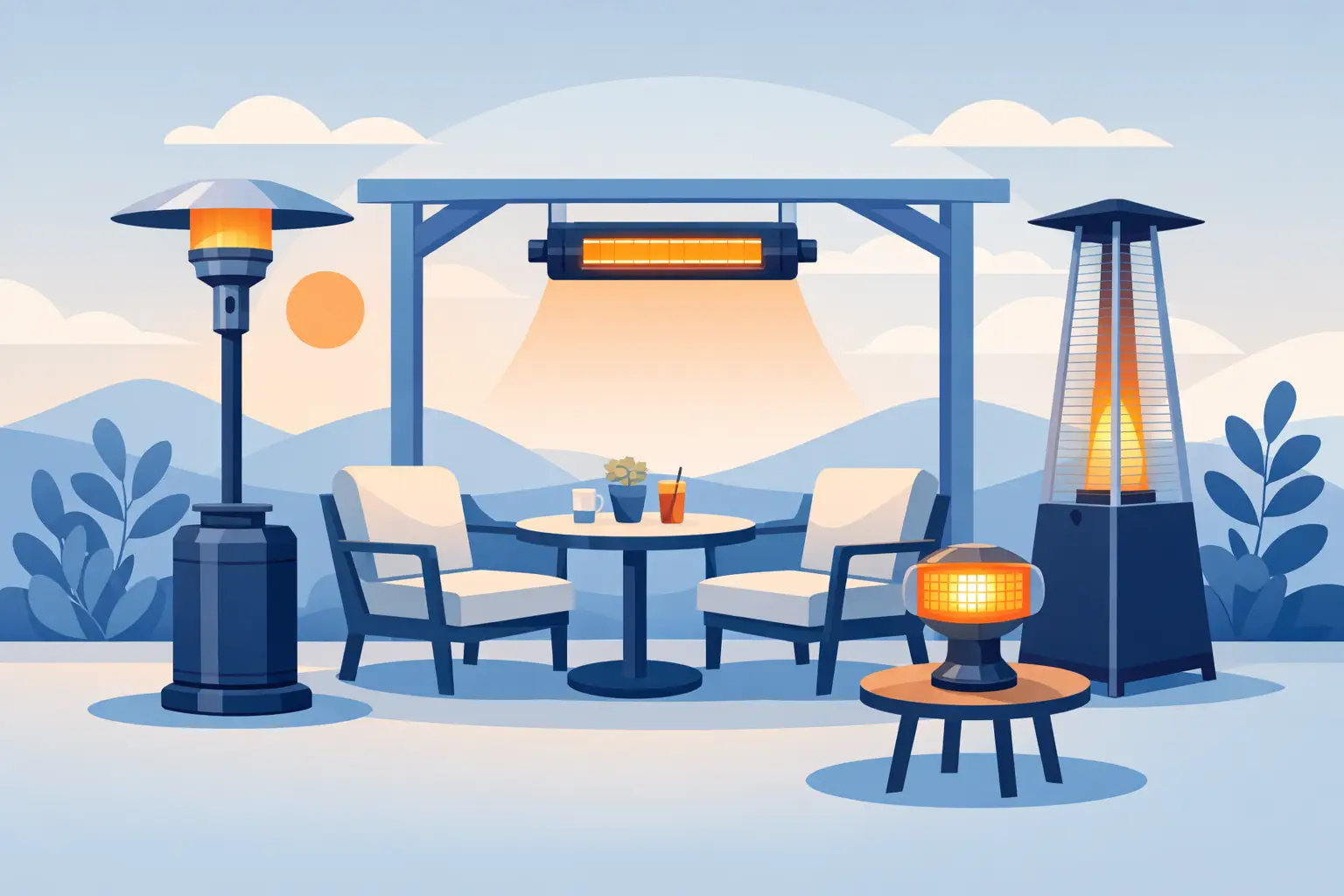
Freestanding mushroom-style heaters are familiar for a reason. They cover a wider radius and work well in social settings, especially if you entertain often. They do, however, take up floor space and can dominate smaller patios visually.
Tall pyramid heaters bring a more decorative presence. They are often chosen as much for ambiance as for warmth, which can be worth it in design-led spaces. Still, they are not the right fit for every layout, especially if your priority is discreet heating over a statement piece.
Wall-mounted and ceiling-mounted electric heaters are ideal when floor space is limited or you want a cleaner architectural look. They suit covered patios, outdoor kitchens, and compact entertaining zones particularly well. The compromise is that they are more directional, so they need thoughtful placement.
Tabletop heaters can work for intimate seating areas, but they are rarely the full answer for larger gatherings. Think of them as accent comfort rather than primary outdoor heating.
Style should be part of the decision
Outdoor heating is functional, but it also contributes to the atmosphere of the space. On a well-designed patio, material finish, silhouette, and scale all matter.
If your outdoor furniture leans modern, a streamlined black or stainless steel heater may blend more naturally than a bulky traditional model. If your patio has a resort-inspired look with layered textures and statement lighting, a sculptural heater can feel more cohesive. The goal is not to hide the heater completely. It is to choose one that belongs in the setting.
This is where premium shopping makes a difference. A well-made heater can elevate the patio visually while delivering dependable performance. Cheap finishes age quickly outdoors, and a bargain buy often looks exactly like one after a season or two.
Do not overlook safety and clearance
A patio heater should be easy to enjoy without constant worry. Safety features are not optional extras. Look for automatic shut-off protection, anti-tilt mechanisms on freestanding models, and clear manufacturer guidance on use and spacing.
Clearance requirements matter more than many shoppers expect. A heater placed too close to railings, umbrellas, ceilings, or outdoor curtains can create obvious problems. Covered patios need extra attention here. A beautiful setup only works when there is enough room for heat to circulate safely.
If you have children or pets, stability becomes even more important. In active households, wall-mounted or fixed options may feel more secure than portable floor models.
Operating cost and upkeep deserve a closer look
The purchase price is only part of the equation. A patio heater that looks affordable upfront may cost more over time depending on fuel prices, usage patterns, and maintenance needs.
Propane offers flexibility, but regular tank replacement adds to the long-term cost. Natural gas can be economical for frequent use if installation makes sense. Electric heaters often win on simplicity, especially for households that want quick on-off convenience without fuel handling.
Maintenance also varies. Outdoor appliances live with dust, moisture, and temperature shifts, so finish quality and construction matter. Stainless steel and weather-conscious materials generally hold up better, especially if your patio is not fully sheltered. Covers help, but better craftsmanship usually pays off.
The best patio heater is the one that fits your lifestyle
The most successful choice balances comfort, aesthetics, and practicality. If you host often, prioritize coverage and fuel capacity. If your patio is compact and curated, favor sleek placement and visual restraint. If your outdoor season stretches well into fall, invest in a model built for regular use rather than occasional warmth.
For many shoppers, the smartest move is to treat heating as part of the overall outdoor design plan, not a last-minute add-on. When the proportions are right, the fuel type fits your routine, and the finish complements the furniture, the patio feels complete in a way guests notice immediately.
A well-chosen heater does more than fight the chill. It extends dinners, softens cool evenings, and makes the outdoor space feel like a true continuation of the home. If you are curating a more refined setup, choose the piece that warms the experience as much as the air.










Leave a comment